
At Arohi Eye Hospital, many patients often ask, “Doctor, is my blurry vision because of Cataract or Glaucoma?” As a patient, this confusion is very understandable, as both conditions cause vision problems, especially in adults over 40. However, vision loss through cataracts is common and treatable, but glaucoma can silently steal eyesight if ignored.
In this guide, we have covered glaucoma vs cataract. Understanding the cause, symptoms of glaucoma and cataract, available treatment options, and prevention can make all the difference in preserving your sight. Studies say cataract affects around 14-15% of older citizens of India, and glaucoma impacts 2-4%, often undiagnosed in up to 90% of cases. Early detection is essential in a city like Mumbai, where pollution and screen time add extra strain to your eyes. A handy table awaits below; let’s compare them clearly.
What are Cataracts? The “Cloudy Window”
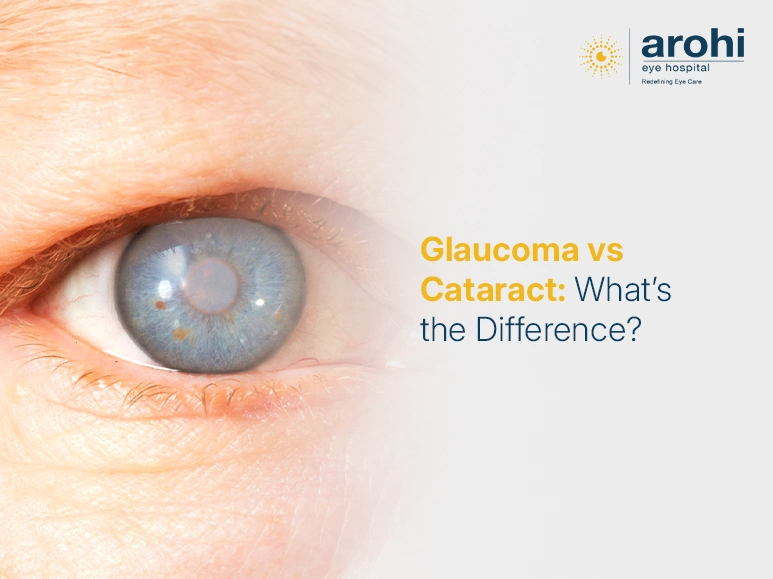
A cataract is the clouding of the eye’s normally clear lens. It forms when proteins in the eye’s natural lens clump together, clouding it and scattering light. Imagine looking through a dusty windshield. That is what cataracts feel like.
Common symptoms of cataracts and glaucoma overlap slightly; however, cataracts are more obvious: faded colours (everything looks sepia-toned), poor night vision with glaring halos around lights (a real challenge for Mumbai drivers navigating traffic), and frequent prescription changes for glasses.
Age is the biggest culprit for its occurrence after 60, but India’s intense UV exposure, high diabetes rates, and lifestyle factors accelerate it.
Still unsure whether it’s glaucoma or cataract? A simple eye exam can give you clarity and peace of mind.
What is Glaucoma? The “Silent Thief of Sight”
Glaucoma is a group of eye diseases where increased intraocular pressure (IOP) damages the optic nerve, the cable connecting your eye to the brain. Unlike cataracts, it steals vision permanently if untreated.
Here is the scary part. It is called the “silent thief” because the early stages show no pain or blurred vision. It creeps in by dimming peripheral (side) vision first, something most people do not notice until central vision suffers. By then, damage is irreversible.
The most common type of glaucoma is chronic open angle Glaucoma, gradual and sneaky. Primary angle closure glaucoma strikes suddenly, blocking drainage and spiking pressure, a true emergency with severe pain, nausea, and red eyes. Rarer forms include congenital glaucoma in babies.
Have you had your eye pressure checked lately? Do not wait for symptoms.
Key Differences: Glaucoma vs Cataract
Wondering how to spot the difference? Here is a clear comparison:
| Aspect | Cataract | Glaucoma |
| Affected Part | Lens of the eye | Optic nerve |
| Main Cause | Protein buildup/clouding of the lens | High eye pressure is damaging the nerve |
| Symptoms Onset | Gradual, noticeable blurring | Often silent until advanced |
| Vision Loss | Reversible with surgery | Usually irreversible |
| Pain | Usually painless | Can be painless or sudden, severe pain |
| Common Age | 60+ | 40+ (higher risk in Asians) |
| Treatment Goal | Restore clear vision | Prevent further damage |
Cataract vs Glaucoma: Symptoms and Progression
Cataracts progress noticeably. Colours fade, and night driving becomes tricky. Glaucoma sneaks up, starting with side vision loss. Key takeaway? Vision loss through cataracts is fixable; glaucoma damage is not. Many have both. Cataract surgery sometimes eases mild glaucoma pressure. Co-existence is common in ageing eyes.
Can You Have Both Glaucoma and Cataracts Simultaneously?
Yes, it is possible and more common than you think. As both conditions are age-related, many patients visit us and are diagnosed with both cataract and glaucoma during a comprehensive eye checkup. This combined eye condition often complicates symptoms, making diagnosis by an experienced ophthalmologist critical.
Once the cataract gets advanced or hypermature, it can actually trigger secondary glaucoma by blocking the fluid drainage and raising eye pressure. In such cases, delaying treatment can accelerate optic nerve damage.
Patients may require a coordinated approach, combining cataract surgery with glaucoma management. To explore advanced options, you can learn more about best cataract surgery In Mumbai or specialised glaucoma surgery in Mumbai services offered by our experts.
E] Treatment Differences
Treatment for glaucoma and cataract varies dramatically.
Glaucoma Treatment
The goal is to slow progression. We cannot reverse nerve damage. Options start with medicated eye drops to lower pressure, move to laser therapy (like SLT), or surgery (trabeculectomy or MIGS) when needed.
Cataract Treatment
Cataract treatment is a straightforward surgery. It removes the cloudy lens and implants an intraocular lens (IOL). It is quick, often outpatient, with a fast recovery. Many resume activities in days.
When both exist, customisation is required. At Arohi Eye Hospital, we use cutting-edge diagnostics and minimally invasive techniques for safer results and quicker recovery. We have been recognised as a top eye hospital in Mumbai since 2010 due to our personalised and compassionate care.
Still unsure whether it’s glaucoma or cataract? A simple eye exam can give you clarity and peace of mind
Conclusion
Understanding glaucoma vs cataract is truly essential to save your sight. While cataracts cloud vision gradually and are treatable, glaucoma progresses silently and causes permanent damage if missed. The key lies in timely diagnosis, expert evaluation, and personalised care. Our specialists combine years of experience with advanced technology to effectively diagnose and manage a wide range of eye conditions. If you value your vision, don’t delay seeking professional care. A comprehensive eye examination can help detect issues early and ensure timely treatment for better long-term eye health.
Frequently Asked Questions
1. Are glaucoma and cataracts the same thing?
No. Glaucoma damages the optic nerve while cataracts cloud the lens. They are completely different eye conditions.
2. How can I tell if I suffer from glaucoma or cataracts?
Cataracts cause gradual blur and halos. Glaucoma is often silent. Only a professional eye exam can confirm the cause.
3. Which is worse: glaucoma or cataracts?
Glaucoma is more dangerous because the vision loss is usually permanent. Cataracts are fully treatable with surgery.
4. Can cataracts lead to glaucoma?
Yes. Advanced or hyper-mature cataracts can increase eye pressure and cause secondary glaucoma.
5. Can a person with glaucoma have cataract surgery?
Yes. Many patients have both. Cataract surgery is safe and can sometimes be combined with glaucoma procedures.

Dr. Shradha Goel (CEO)
Dr. Shradha Goel, Chief Surgeon at Arohi Eye Hospital, is a renowned Phaco-LASIK surgeon with over 10,000 surgeries to her credit. She earned her MBBS from Grant Medical College, Mumbai, and a Master’s in Ophthalmology from Kasturba Medical College, Manipal. As a member of the American Academy of Ophthalmology, Dr. Goel specialises in LASIK, refractive errors, and cataract treatments.