
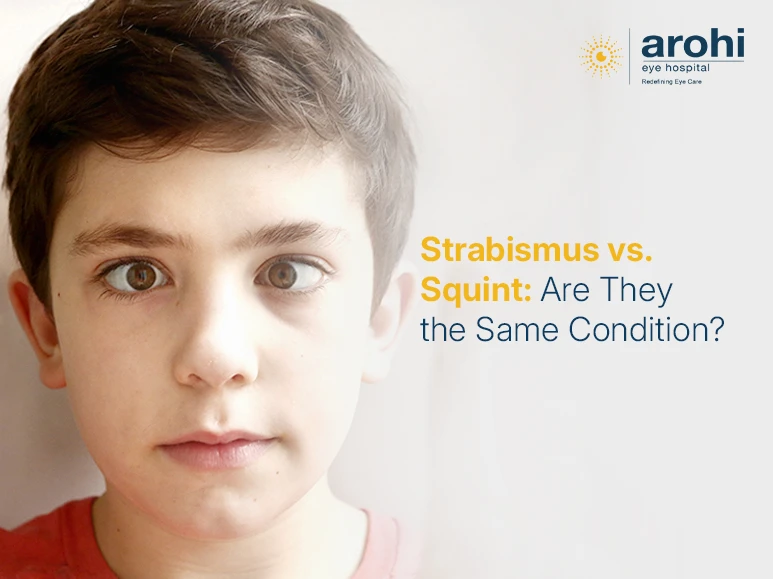
Have you ever noticed someone’s eyes not aligning perfectly, perhaps in a family photo or during a conversation? This common issue raises questions like “what are squint eyes” or “what is strabismus eye”. Simply put, it’s a condition where the eyes don’t line up together; one might turn in, out, up, or down while the other gazes straight ahead. Often, people confuse the terms, but strabismus is the precise medical name, while “squint” is the everyday label, much like how “lazy eye” is medically known as amblyopia. If your child is frequently covering one eye, blinking excessively, or tilting their head oddly, it could signal this misalignment. The good news? Early intervention can correct it effectively, restoring clear vision and confidence.
What Exactly Is Strabismus/Squint?
To understand the “squint eyes” condition, let’s first understand normal vision.
In healthy eyes, the eyes point at the same object. The brain combines the two images and produces a single, clear three-dimensional picture. Such coordination provides precision in depth perception.
In a squint or strabismus eye disorder, the eye muscles or nerves do not work in harmony. One eye may turn inward, outward, upward, or downward while the other looks straight. The brain may then double or ignore the image from one eye to avoid confusion.
If untreated, this can lead to poor depth perception, cosmetic concerns, and lazy eye. Recognising early symptoms of strabismus is crucial for preventing permanent visual weakness.
Do not ignore eye misalignment. Get expert care now.
Strabismus vs. Squint: Are They Actually Different?
The most common question patients usually ask us is, “Is there any real difference between strabismus and squint?”
The direct answer is no. There is no medical difference between the two. Both terms describe the same eye alignment disorder in which the eyes do not look in the same direction at the same time.
The confusion arises because of terminology. “Strabismus” is the clinical term used by ophthalmologists in diagnosis, prescriptions, and surgical notes. “Squint” is the commonly used word among laymen in everyday conversation.
Why Do Doctors Use the Term Strabismus?
Doctors prefer the term “strabismus” because it is medically precise and universally recognised. It also helps classify specific types of strabismus, such as esotropia, exotropia, hypertropia, and hypotropia. These classifications are essential for treatment planning.
In contrast, “squint” is a general term that does not specify the direction or type of deviation. That is why medical records and reports always mention strabismus rather than squint.
Quick Comparison Table
| Parameter | Strabismus | Squint |
| Meaning | Medical term for eye misalignment | Common term for eye misalignment |
| Condition | Same eye alignment disorder | Same eye alignment disorder |
| Usage | Used in diagnosis and medical reports | Used in everyday language |
| Classification | Helps define specific types of strabismus | Does not specify exact type |
| Medical Validity | Clinically recognised worldwide | Informal term |
Strabismus and squint refer to the same eye alignment disorder. Strabismus is the medical term used by doctors, while squint is the commonly used word among the public.
Understanding this eliminates confusion and allows families to focus on early diagnosis, recognising symptoms of strabismus, and identifying the underlying causes of strabismus for timely treatment.
Symptoms to Watch For
Early detection makes your treatment easier and more effective. Keep an eye on these symptoms of strabismus at home.
- One eye drifting inward, outward, upward, or downward, often visible in photos
- Repeated blinking, rubbing, or covering one eye
- Head tilt or chin shift while focusing
- Double vision complaints in adults
- Reading difficulty or poor concentration in school
- Difficulty judging distance or movement
For infants under six months, occasional wandering is normal. However, persistent misalignment after this age requires evaluation. Avoiding these early symptoms of strabismus can lead to permanent visual weakness.
Causes of Squint/Strabismus
Understanding the causes of squint helps reduce unnecessary anxiety. Common causes of strabismus include:
- Muscle imbalance, where one eye muscle pulls stronger or weaker than the other
- Nerve-related problems due to birth issues, injury, stroke, thyroid disorders, or diabetes
- High refractive errors, especially unequal power between the eyes
- Family history, as certain causes of squint run genetically
- Other eye problems, such as cataract or retinal conditions
Many childhood cases have no serious underlying disease. With timely diagnosis, most causes of strabismus in children respond very well to treatment.
Treatment Options for Squint / Strabismus
Can different types of squint eyes be corrected permanently? In most cases, yes.
Treatment depends on age, severity, and the underlying causes of squint.
Non Surgical Options
1. Glasses or Contact Lenses
High spectacle power is one of the common causes of strabismus in children. Correcting refractive errors can significantly improve alignment.
2. Patching Therapy
If a lazy eye develops, patching the stronger eye helps strengthen the weaker eye and improve visual development.
3. Vision Therapy
In selected mild or intermittent types of strabismus, structured exercises improve coordination between the eyes.
Surgical Correction
Surgery is recommended when misalignment is constant, causes double vision, or does not improve with glasses.
The procedure adjusts the eye muscles to restore proper alignment. It does not remove the eye or reduce vision. It simply rebalances muscle positioning.
At Arohi Eye Hospital, squint surgery is typically a day-care procedure. Many cases are stitchless. The success rate is high when performed by experienced eye muscle surgeons. Recovery is usually quick with proper postoperative care.
For detailed information about advanced strabismus treatment, contact our squint specialist in Mumbai.
Arohi’s approach for Squint/Strabismus
At Arohi Eye Hospital, we begin the management with a complete assessment that includes;
- Accurate refraction testing
- Binocular vision evaluation
- Detailed eye movement analysis
- Neurological screening when required
Based on the specific types of squinting eyes and patient age, a customised plan is created. This may include glasses, patching, therapy, or surgery.
With expertise in paediatric and adult strabismus care, the hospital follows evidence-based protocols aligned with international standards.
Notice eye misalignment? Consult a specialist today.
Conclusion
Understanding the difference between strabismus and squint removes unnecessary fear and confusion. However, both terms describe the same condition. Both terms are used to refer to the same condition, and most cases can be corrected successfully when detected at early stages. It is all about identifying the warning signs, diagnosing the underlying reason and finding expert assistance promptly. Untreated misalignment may affect vision, depth perception, and confidence. Consulting an experienced eye specialist in India ensures accurate diagnosis and personalised treatment. It is now safer, quicker and more successful than ever to realign the eyes with the use of modern methods and specialised care. Early intervention actually protects lifetime vision and visual development.
Frequently Asked Questions
1. Can adults develop strabismus?
Yes. While many cases begin in childhood, adults can develop it due to injury, diabetes, stroke, thyroid disease, or other neurological causes of strabismus.
2. Are lazy eye and squint the same?
No. Squint refers to eye misalignment. Lazy eye (amblyopia) is poor vision in one eye, and this is usually due to unaddressed symptoms of strabismus.
3. Can strabismus affect vision permanently?
Yes, if untreated. Early intervention helps to avoid complications in the long term.
4. What are the treatment options?
Glasses, patching, therapy, and surgery, depending on the specific types of strabismus.
5. How is it diagnosed?
Using visual acuity, refraction, eye alignment examination, and binocular vision evaluation in a specialised eye hospital.

Dr. Shradha Goel (CEO)
Dr. Shradha Goel, Chief Surgeon at Arohi Eye Hospital, is a renowned Phaco-LASIK surgeon with over 10,000 surgeries to her credit. She earned her MBBS from Grant Medical College, Mumbai, and a Master’s in Ophthalmology from Kasturba Medical College, Manipal. As a member of the American Academy of Ophthalmology, Dr. Goel specialises in LASIK, refractive errors, and cataract treatments.