

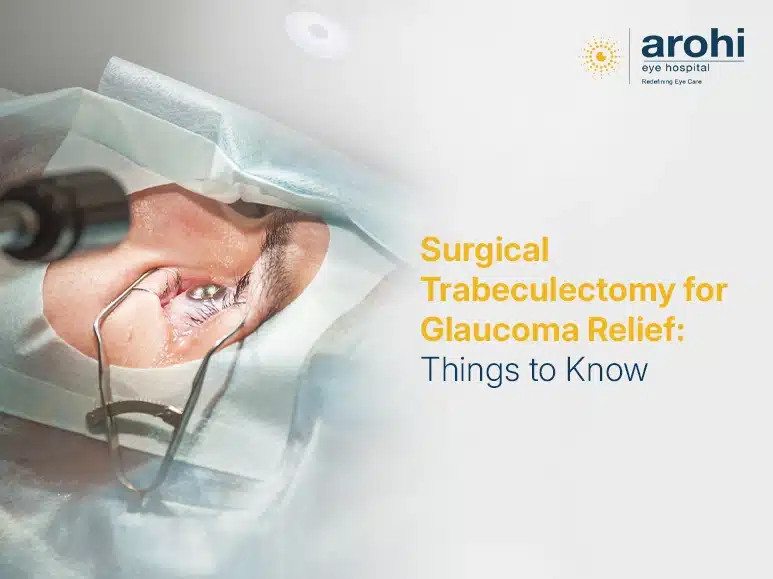
Glaucoma is an eye disease that comes silently, and in India, where most people have not made eye checks a regular practice yet, this silence can be devastating. At Arohi Eye Hospital, many patients reach us when their vision has significantly deteriorated. By then, the medication and lasers might not be sufficient to hold the disease back. At this stage, surgical trabeculectomy usually becomes one of the most reliable methods of avoiding further damage.
In this blog, you will learn what this surgery truly involves, how to prepare for it and what recovery looks like. With years of experience performing glaucoma surgeries in Mumbai, our team brings both expertise and empathy to every case.
Understanding Glaucoma & When Surgery Becomes Necessary
Glaucoma is not just “high pressure in the eye”. It is a progressive optic nerve disease, and once nerve fibres die, they do not grow back. The most common types observed in India are the primary open-angle glaucoma, in which fluid drainage becomes sluggish over time and angle-closure glaucoma, which may cause sudden or chronic blockage of the drainage angle.
The doctor’s first approach is medication and laser treatment; however, when pressure turns out to be stubbornly high and visual field scans show deteriorating blind spots, the glaucoma eye surgery becomes not merely an option but an absolute necessity.
The scenarios when surgery is recommended:
- Despite maximum medication, pressure is uncontrolled.
- Damage to the optic nerve is progressing.
- Laser treatment has become unsuccessful or inappropriate.
- The risk of further damage is high.
Since glaucoma damage is irreversible, timely surgical intervention often prevents what delay cannot undo.
Struggling with high eye pressure? Get expert help
What is Trabeculectomy?
Patients often ask, “What is trabeculectomy, and will it restore my vision?” To keep it simple: trabeculectomy is a procedure that creates a new drainage passage for eye fluid to escape. When the eye’s natural drainage system fails, pressure rises, and optic nerve fibres die. Trabeculectomy bypasses the failed system and lowers IOP by forming a controlled escape route into a tiny reservoir called a bleb.
Compared with other procedures, such as MIGS or tube-shunt implantation, trabeculectomy for glaucoma remains the gold standard for moderate to advanced cases. It achieves greater pressure reduction and long-term stability, which is why ophthalmologists across India continue to rely on it.
The Procedure: How Should I Prepare for Trabeculectomy?
The preparation is as important as the procedure itself. At Arohi Eye Hospital, your glaucoma surgeon performs a detailed evaluation, including optic nerve imaging, IOP readings at different times of day, gonioscopy, and visual field mapping. These tests help determine your risk level and ensure the surgery is customised for your eye structure.
You’ll also be asked about:
- Your medical history
- Blood thinners such as aspirin, clopidogrel or warfarin
- Diabetes or hypertension medication
- Any allergies to anaesthetic agents or eye drops
Depending on your case, the surgeon may advise adjustments in systemic medication a few days prior. Fasting may be required, and someone should accompany you home after the procedure.
For many Indian patients, practical concerns like cost, post-surgery visits, travel distance, and insurance availability matter just as much as medical decisions. At our Andheri West facility, the availability of cashless options, in-house diagnostics, and consistent aftercare support helps ease these concerns, which is one reason many choose us as their preferred eye specialist in Mumbai.
Step-by-Step Surgical Process for Trabeculectomy
Here, a narrative paragraph alone doesn’t do justice; the steps must be clear. Yet they don’t need to feel mechanical. Below is a clear, human explanation of what actually happens in the OT:
1. Anaesthesia & Preparation
You remain awake but comfortable under local anaesthesia. The eye is thoroughly cleaned, and a sterile drape is placed.
2. Creating the Access Flap
A tiny flap is fashioned on the sclera (white of the eye) to control the movement of fluid. This step requires precision and a surgeon with experienced hands.
3. Forming the Drainage Opening
A small channel is created under the flap to allow fluid to exit. This is the heart of trabeculectomy eye surgery.
4. Controlling the Flow
Fine sutures are used to adjust the pressure and ensure the flow is neither too high nor too low.
5. Closing the Conjunctiva
The outer tissue is restored to form a reservoir (bleb), which becomes the new drainage site. The entire surgery usually takes 30–45 minutes. Most patients describe feeling mild pressure sensations but no pain. At Arohi Eye Hospital, advanced microscopes, high-precision instruments, and a skilled team ensure safety and consistency.
Trabeculectomy Aftercare & Recovery
Recovery is gradual, and being mentally prepared helps tremendously. Immediately after surgery, the eye is protected with a shield. Vision may be blurry for a few days, and the eye may feel scratchy or red, which is completely normal.
While the broader recovery remains narrative, some instructions are best conveyed clearly:
Post-surgery Dos & Don’ts:
- Use prescribed eye drops exactly as instructed.
- Avoid touching or rubbing your eyes.
- Keep water, soap, and dust away from the surgical eye.
- Sleep with a protective shield for at least a week.
- Avoid lifting weights, bending, or exercising until advised.
Pressure stabilisation does not happen overnight.
- In 1 week, the initial healing is visible.
- In 1 month, the bleb begins to mature.
- By 3 months, the final outcome becomes clear.
Follow-ups are crucial because the bleb sometimes needs adjustment or massage by the doctor. Long-term success depends heavily on regular review of pressure, optic nerve status, and visual fields. Skipping visits is one of the most common causes of trabeculectomy failure in India.
Success Rates, Benefits & Potential Risks/Complications
One of the reasons surgical trabeculectomy has stood the test of time is its success rate, global literature places it around 70–90%, depending on age, type of glaucoma, and scarring tendency. In many patients, the pressure drops enough to reduce or eliminate medications. More importantly, it slows the disease dramatically, preserving whatever vision remains.
However, like every eye surgery for glaucoma carries risks such as infection, scarring of the bleb, excessive pressure drop (hypotony), or gradual failure. A skilled surgeon can recognise early signs of trouble and intervene promptly. At Arohi Eye Hospital, constant monitoring, patient education, and a structured follow-up plan keep these risks to a minimum.
If a trabeculectomy does fail, something patients often fear, the good news is that other options like needling, revision surgery, or tube-shunt implantation remain available.
Why Choose Arohi Eye Hospital for Glaucoma Surgery
Choosing the right hospital is as important as choosing the right procedure. As an established centre with cutting-edge diagnostic tools and a dedicated glaucoma department, Arohi Eye Hospital offers a blend of precision, compassion, and consistency. Whether you simply need guidance for long-term glaucoma care or want to visit us for trabeculectomy surgery in Mumbai, you will find support at every step.
Patients appreciate our multilingual staff, transparent communication, and the comfort of knowing that every decision is evidence-based. To book a consultation, you can call our centre or schedule an appointment online. Bring your previous reports, medication list, and glasses to help us assess your condition thoroughly.
Secure your eyesight with advanced glaucoma care
Conclusion
Trabeculectomy is a major decision, and choosing an experienced partner matters as much as choosing the procedure itself. At Arohi Eye Hospital, every glaucoma case is personally evaluated and planned by a senior glaucoma specialist in Mumbai, with clear communication, realistic expectations, and long-term follow-up built into your care. If you have been advised trabeculectomy or are confused about the next step in your glaucoma journey, this is the right time to seek a second opinion, bring your previous reports, and sit with our team to understand what surgery can and cannot do for your vision.
Frequently Asked Questions
1. How long does trabeculectomy take?
Trabeculectomy glaucoma surgery usually takes around 30–45 minutes.
2. What happens after a trabeculectomy?
You’ll be required to use drops, attend follow-ups, avoid strenuous activity, and allow the eye to heal gradually.
3. Can trabeculectomy reverse vision loss from glaucoma?
Unfortunately, no! However, it aims to prevent further damage.
4. What happens when trabeculectomy fails?
Approaches like needling, revision, medications, or tube-shunt surgery may be considered.
5. How painful is a trabeculectomy?
At our Arohi Eye Hospital, most patients report mild discomfort, but not pain.

Dr. Shradha Goel (CEO)
Dr. Shradha Goel, Chief Surgeon at Arohi Eye Hospital, is a renowned Phaco-LASIK surgeon with over 10,000 surgeries to her credit. She earned her MBBS from Grant Medical College, Mumbai, and a Master’s in Ophthalmology from Kasturba Medical College, Manipal. As a member of the American Academy of Ophthalmology, Dr. Goel specialises in LASIK, refractive errors, and cataract treatments.