

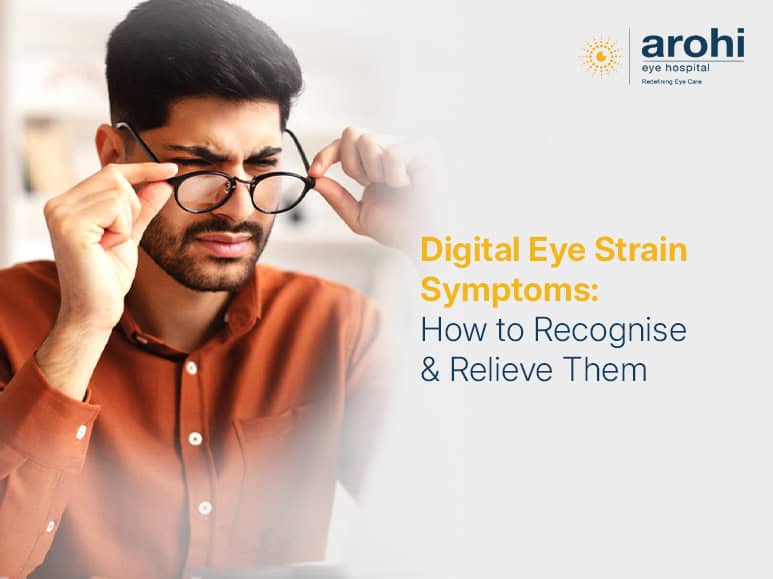
Have you ever found yourself rubbing your eyes after a tedious day of scrolling, working, or binge-watching on your laptop? Most of us live in a digital-first world where we spend more time looking at screens than we realise, and our eyes often pay the price. Most people attribute it to tired eyes, but it is actually a common condition known as digital eye strain. Surprisingly, it is a problem that is usually swept under the carpet until it starts interfering with normal day-to-day life.
In this blog, we will cover what exactly this condition is, the key digital eye strain symptoms, and some practical tips to relieve them. And lastly, and finally, what is the appropriate time to get professional help, before it is too late? Let’s dive into details!
What is Digital Eye Strain?
Digital eye strain, also known as computer vision syndrome, is a group of vision-related problems caused by excessive screen time. Unlike common vision errors such as myopia or hyperopia, this condition results from the way our eyes and brain interact with digital displays. Screens demand more effort: letters are less defined, contrast is lower, and glare is higher than on printed material. According to the American Optometric Association, more than 50% of regular computer users experience symptoms of eye strain daily. The average daily screen time of working adults is more than 7 hours; thus, it is not surprising that this problem is becoming a modern health epidemic.
The Telltale Signs: 7 Symptoms to Look For
So, how do you understand if what you’re experiencing is tiredness due to a heavy day or something more specific, like screen eye strain? To simplify your doubt, these are the seven clear warning signs:
-
Headaches and Blurry Vision
Frequent headaches, especially after long work sessions, signal that your eyes are struggling to keep up with the constant near-focus required by screens. Blurry vision often follows prolonged exposure.
-
Dry, Itchy, or Burning Eyes
Reduced blinking while staring at monitors causes the eyes to dry out, leaving them red, irritated, or burning. This is a hallmark of computer monitor eye strain.
-
Neck and Shoulder Pain
Surprisingly, as it sounds, eye strain can manifest physically. Poor posture, combined with constant screen focus, puts unnecessary stress on your neck and shoulders.
-
Difficulty Focusing
Do you find your eyes “lagging” when shifting focus from the screen to paper or distance viewing? That difficulty adapting to different focal lengths is another common symptom.
-
Increased Sensitivity to Light
Bright screens or sudden changes in lighting can suddenly feel overwhelming. If glare worsens your discomfort, it’s likely related to digital strain.
-
Double Vision
Extended digital use can cause brief or persistent double vision, a warning that your eyes’ coordination is wearing out.
-
Sore or Tired Eyes
Often dismissed as fatigue, this constant heaviness or soreness is one of the clearest indicators of how to treat digital eye strain as an urgent need.
The Causes of Digital Eye Strain
So why do screens cause such widespread discomfort? The triggers are quite specific:
-
Improper Lighting and Glare
Working under dim lights or in a harshly lit environment can strain your eyes. Glare directly from monitors or reflective surfaces only worsens the stress.
-
Incorrect Viewing Distance
Ideally, your eyes should be at an arm’s length from the screen. Sitting too close or far away disrupts the natural focusing rhythm.
-
Reduced Blink Rate
Studies indicate that individuals blink their eyes 60% less when using digital gadgets. Reduced blinkage leads to reduced lubrication and increased dryness in the long run.
-
Blue Light Exposure
Although studies are ongoing, excessive exposure to high-energy blue light from devices can also disrupt sleep patterns and cause retinal stress in the long run.
Effective Strategies for Digital Eye Strain Relief and Prevention
Digital eye strain symptoms do not necessarily need massive changes in lifestyle to relieve and prevent them. Minor daily practices can help reduce discomfort:
-
The 20-20-20 Rule
Every 20 minutes, ensure to look at something that is 20 feet away for 20 seconds. This technique sounds simple, but it is powerful and allows your eyes to relax.
-
Adjust Your Screen Settings
As per your room light, adjust your brightness to match it. Increase font size, use warmer screen tone or reading modes to reduce harsh contrast.
-
Optimise Your Workspace
Always keep your screen at eye level, maintain your body posture, and ensure there is soft lighting to cut glare. Ergonomics matters for both body and eyes.
-
Use Artificial Tears
Using lubricating eye drops instantly relieves dryness caused by reduced blinking. Ensure the eye drops are preservative-free for the safest long-term use.
-
Consider Anti-Glare/Blue Light Glasses
Well, it’s not a complete cure, but coated lenses reduce the glare and filter excessive blue light, giving eye comfort for long-hour users.
-
Regular Eye Exams
Regular eye checkups with a well-equipped hospital help to detect eye strain and any other eye issues that may be developing and can be treated on time to avoid vision problems.
These simple tips will help you to substantially reduce computer monitor eye strain and ensure long-term, healthier eyes.
When to See an Eye Doctor
Sometimes self-care is sufficient. When the symptoms of screen eye strain (such as long-term headache, blurred vision, or double vision) do not disappear despite the preventive measures, it is time to see an ophthalmologist. This is what makes one think that there could be more than digital strain. In Arohi Eye Hospital, we have professionals who use the newest diagnostics to deliver personalised computer vision syndrome treatment. Don’t delay; untreated stress on your eyes can have lasting impacts.
Conclusion
Digital devices are here to stay, but eye discomfort doesn’t have to be. By recognising the classic digital eye strain symptoms, understanding their causes, and putting simple prevention strategies in place, you can reclaim your comfort and productivity. Most importantly, never underestimate persistent issues; professional evaluation is the safest way to protect long-term eye health.
For expert care in Mumbai, the team at Arohi Eye Hospital is ready to provide effective solutions for every aspect of digital eye strain treatment, led by our most experienced eye surgeon in Mumbai. Your eyes deserve attention as much as the technology that drives your daily life.
Frequently Asked Questions
1. What is the fastest way to relieve eye strain?
Following the 20-20-20 rule and using artificial tears provides instant relief.
2. How long until digital eye strain goes away?
Mild symptoms may take a few hours of rest for improvement, but persistent strain could take days without proper treatment.
3. Is dark mode better for your eyes?
Dark mode reduces glare in low-light settings, but readability depends on individual preference and ambient lighting.
4. Do blue light glasses work?
They can reduce discomfort caused by glare and high-energy light, but they are just one part of a larger prevention strategy.
5. What screen colour is best for the eyes?
The warmer colour settings (soft contrast) are less harsh than black-and-white contrasts.

Dr. Shradha Goel (CEO)
Dr. Shradha Goel, Chief Surgeon at Arohi Eye Hospital, is a renowned Phaco-LASIK surgeon with over 10,000 surgeries to her credit. She earned her MBBS from Grant Medical College, Mumbai, and a Master’s in Ophthalmology from Kasturba Medical College, Manipal. As a member of the American Academy of Ophthalmology, Dr. Goel specialises in LASIK, refractive errors, and cataract treatments.